They're Only Here for a Little While: Why Your Dog Deserves a Real Portrait Before It's Too Late
They're Only Here for a Little While: Why Your Dog Deserves a Real Portrait Before It's Too Late
There's a photo I keep thinking about. Not one I took — one I didn't.
A client reached out to me a few years back, not to book a session, but just to talk. Her dog, a ten-year-old golden retriever named Biscuit, had passed away two weeks earlier. She'd had him since she was twenty-six. She'd moved across three states with him. He'd slept at the foot of her bed through a divorce, two new apartments, and eventually a house she bought on her own. He was, in every meaningful sense, her family.
What she said to me still sits somewhere in my chest: "I have a thousand blurry photos on my phone and not a single one where you can really see his face."
That's the thing about pet photography. Nobody thinks they need it — until they desperately wish they had it.
The Gap Nobody Talks About
When we talk about documenting a family's story, we tend to think in human milestones. Babies, graduations, weddings, holidays. We think about the people sitting around the table. But for most American households, there's another presence that's woven into every single one of those moments — a dog curled under the Christmas tree, a cat perched on a lap during Sunday dinner, a rabbit that the kids dragged into every birthday photo whether anyone planned it or not.
According to the American Pet Products Association, roughly 70 percent of U.S. households own a pet. Dogs and cats alone number in the hundreds of millions. These animals aren't accessories. They're companions. They're comfort. They are, for a lot of families, the emotional center of the home.
And yet — when it comes to intentional, quality photography — they're almost entirely invisible.
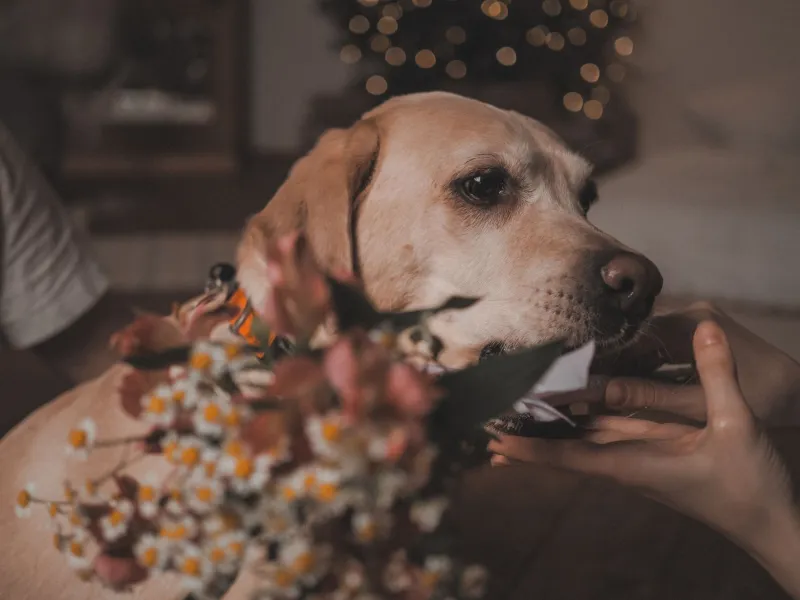
We snap pictures constantly, sure. Most of us have hundreds of photos of our pets scattered across our camera rolls. But there's a difference between a quick snap when your dog does something funny and a real portrait — one where the light is right, where you can see the texture of their fur, the particular expression in their eyes, the way they hold their head when they're watching you. One that actually captures who they are.
That distinction matters more than most people realize — until the animal is gone.
Grief Has a Way of Changing What You Wish You'd Done
Pet loss is one of the most underestimated forms of grief in American culture. We've gotten better about acknowledging it in recent years, but there's still a tendency to minimize it — to treat it as something you're supposed to move through quickly, something that doesn't quite rise to the level of other losses.
Anyone who has actually lost a beloved animal knows that's not how it works.
The grief is real. It's physical. It lives in the doorway where they used to wait for you, in the food bowl you keep almost tripping over, in the way the house sounds different without them in it. And wrapped inside that grief, for so many people, is a specific kind of regret about photographs. Not just that they don't have enough — but that the ones they have don't do justice to who the animal actually was.
Blurry. Poorly lit. Cropped at an awkward angle. A quick snap that caught a moment but not a soul.
That regret is worth taking seriously now, before it has a reason to exist.
Age Happens Faster Than You Think
Here's the part that tends to catch people off guard: animals age in ways we often don't notice in real time.
Because we see our pets every day, the changes happen gradually, right in front of us, and our brains quietly update the image we hold of them. We don't always notice when the muzzle starts going gray, when they take the stairs a little more slowly, when the eyes get a little cloudier around the edges. We're too close to see it.
And then one day — sometimes suddenly, sometimes after a long and tender decline — they're gone. And we look back at the photos we have and realize we were photographing a younger version of them for years without realizing it. The dog we lost was the gray-muzzled, gentle-eyed, slow-to-rise version. And we don't have a single good photo of that dog. The one who was with us at the end.
This is why the timing of a pet portrait session matters so much. Not just when they're young and at peak photogenic energy — but also when they're older. When they've settled into themselves. When their face carries the particular softness that only comes with years of being loved.
Both versions deserve to be documented. Neither should be skipped.
What a Real Pet Portrait Session Actually Looks Like
I'll be honest — photographing animals is genuinely one of my favorite things to do, and also one of the most unpredictable. Dogs especially. They don't take direction. They don't hold poses. They sneeze at the exact wrong moment and then look incredibly pleased with themselves about it.
But that's also kind of the whole point.
A good pet portrait session isn't about forcing your dog to sit still and stare at the camera like a little furry human. It's about following their energy. Letting them be themselves in a space they feel comfortable — your backyard, a favorite trail, your living room floor. It's about the way they look at you, specifically, because nobody else gets that look.
The best pet portraits I've ever made weren't the perfectly posed ones. They were the ones where the dog was mid-shake, or resting their head on someone's knee, or doing that thing where they tilt their head because they heard a word they recognize. Real. Specific. Irreplaceable.
And when you bring your person into the frame — really lean into the relationship between the animal and the human who loves them most — something shifts. Those images become something else entirely. They become a record of a bond. Of a particular kind of love that doesn't require words and doesn't ask for anything in return.
That's the photograph that matters twenty years from now.
Don't Wait for a Sign That Time Is Running Out
I know this article is a little heavy. That's intentional. Because the gentle nudge doesn't always land the way the honest one does.
Your dog is not going to be here forever. Your cat, your rabbit, your ancient tortoiseshell who's been in the family since your youngest was in diapers — none of them are permanent. They are here for a season, and the season has a length you don't get to know in advance.
What you do get to control is whether you document that season with the same intention and care you bring to everything else you love.
You wouldn't let your kid's childhood slip by without photographs. You wouldn't let a milestone pass without trying to hold it still for a moment. Your pet deserves that same impulse — that same recognition that what's happening right now, in this ordinary Tuesday, in this specific version of your household, is worth preserving.
Book the session. Get on the floor with them. Let the light hit their face.
You'll never regret having the photo. But you might spend a long time wishing you'd taken it sooner.