One Last Frame Together: Why a Final Family Portrait Before Divorce Is an Act of Love, Not Illusion
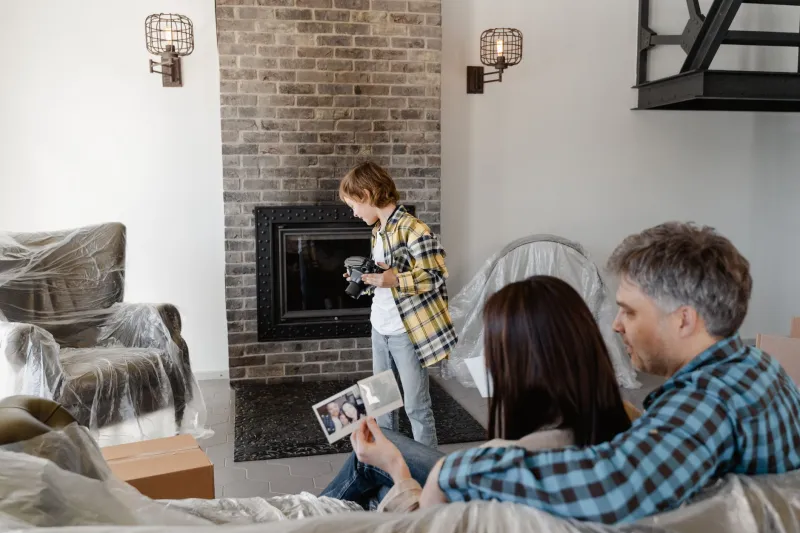
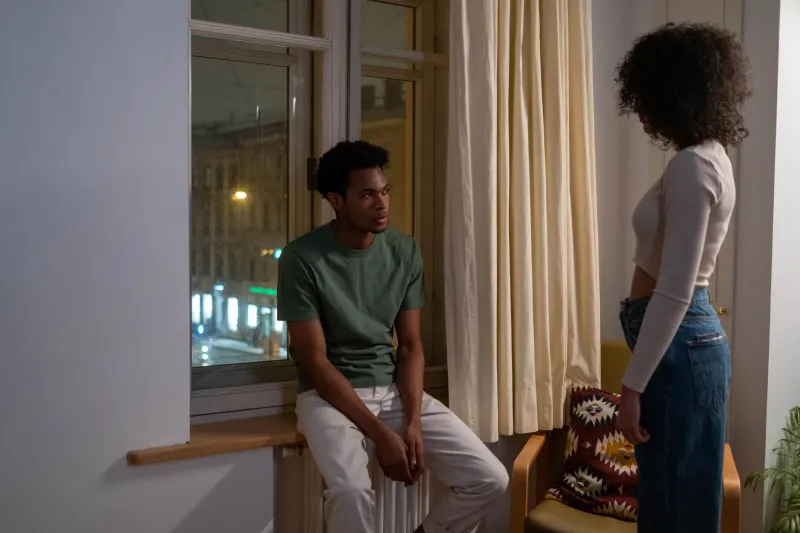
There's a particular kind of quiet that settles over a home in the months before a separation becomes official. The routines are still mostly intact. The kids are still eating breakfast at the same table. The dog still sleeps at the foot of the same bed. But something in the air has shifted, and both adults in the room can feel it even when they're careful not to say so out loud.
It's in that strange, suspended season — after the decision has been made but before the paperwork changes everything — that some parents are choosing to do something that might sound counterintuitive at first: they're booking a family portrait session.
Not because they're in denial. Not because they're hoping a camera can fix what couldn't be saved. But because they understand, maybe more clearly than they ever have, that a photograph isn't a promise. It's a record. And what they're recording belongs to their children.
The Photograph Doesn't Know the Ending
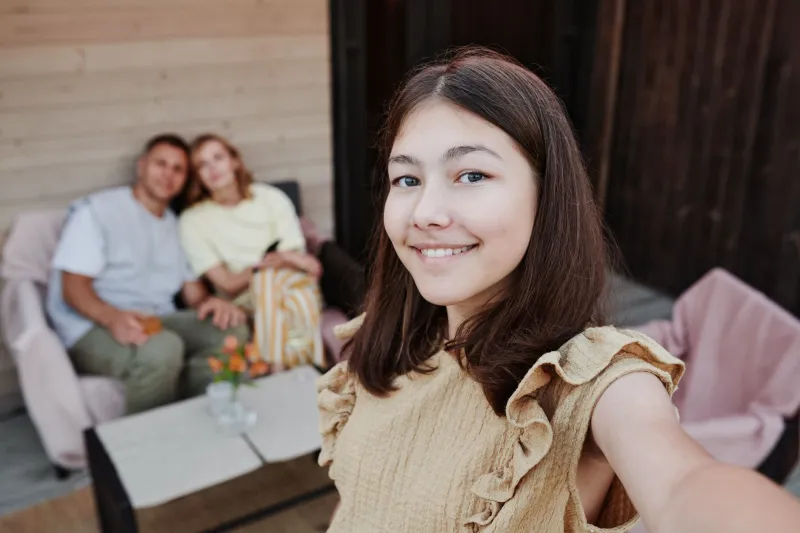
Here's something worth sitting with: a photo doesn't carry context unless you give it one. An image of four people laughing on a front porch doesn't announce that two of them signed divorce papers six weeks later. It just shows four people who loved each other in the particular way that family love works — imperfectly, stubbornly, and real.
That's precisely the point.
For a child who grows up in two households, the years before the split can start to feel blurry or even inaccessible — especially if there are few photographs to anchor the memory. Kids need visual proof that their family existed as a unit. Not because it still does, but because it did. That distinction matters more than most adults realize until the child is fifteen and flipping through an old album and either finds something or doesn't.
Parents who've gone through with a final session often describe a similar experience: they expected it to feel sad, and it did — but it also felt like something else. Like completion. Like giving their kids something durable to hold onto.
"I Wish We Had Done It"
The parents who didn't do it tend to speak about it differently.
One mother from Ohio, now several years out from her divorce, put it plainly: "Our youngest was four when we separated. There are almost no photos of all of us together from her toddler years — we were so focused on everything falling apart that we just... stopped documenting anything. Now she asks about that time and I don't have much to show her. That gap feels like a loss on top of a loss."
That compounding grief — losing the marriage and then realizing you also lost the visual record of the family it produced — is something that catches people off guard. In the chaos of lawyers, logistics, and emotional survival, photography is usually the last thing anyone thinks about. But time doesn't pause while you're getting through the hard part. The kids keep growing. The last version of the family as it existed keeps receding.
What the Session Actually Looks Like
It doesn't have to be elaborate. In fact, the simpler the better.
Some families do it at home — their actual home, with the worn couch and the crayon marks on the doorframe and the backyard they've had birthday parties in. Some choose a park they've returned to every year. Some just want somewhere with good light and enough space for the kids to run around and be themselves.
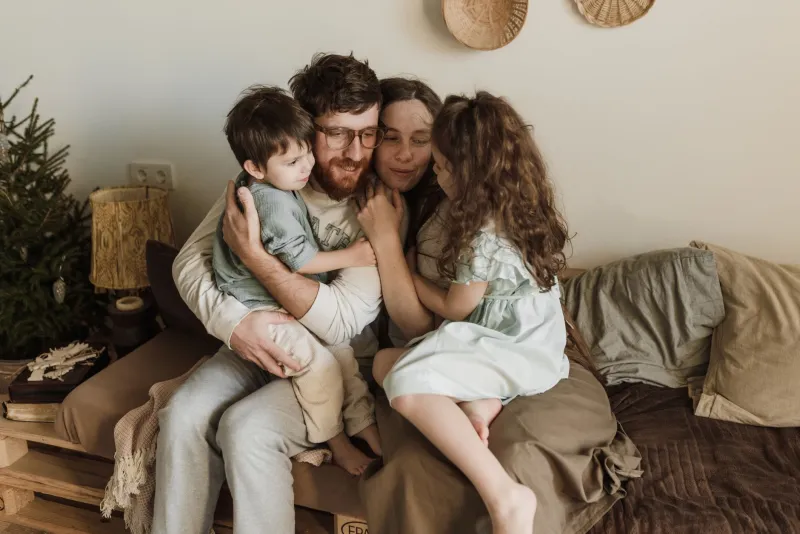
The session doesn't need to announce what it is. The parents don't need to explain the reason to the photographer or to the kids. They just need to show up and be present with each other for an hour in a way that might be harder to do in any other context. The camera creates a kind of permission — a structured reason to stand close, to hold the baby, to let the older kids climb on both of you at once like they always have.
A lot of parents report that the session ends up feeling lighter than they expected. That the kids' energy carries it. That for a stretch of time, the photograph being made is more real than the paperwork waiting at home.
Grace Is Not the Same as Pretending
There's a cultural script around divorce that treats it as a clean break — a before and an after with nothing in between worth honoring. But that framing doesn't serve anyone, least of all the children who had no vote in the matter.
Choosing to make a final portrait isn't a refusal to accept reality. It's actually a deeply clear-eyed acknowledgment of it: this family existed, it was real, it produced these children who are going to carry it inside them for the rest of their lives, and it deserves to be documented with the same intention we gave to every other chapter.
That's grace. Not the greeting-card version, but the practical kind — the kind that thinks ahead to who your kids will be at twenty-five, looking through boxes of old photos and trying to piece together where they came from.
What the Photo Becomes Over Time
A family portrait taken six weeks before a divorce doesn't stay what it is on the day it's taken. Like all photographs, it changes meaning as time moves around it.
In the early years after a separation, it might be too tender to look at. It might live in a drawer or a folder on a hard drive, not quite ready for a wall or an album. That's okay. The photograph is patient.
But eventually — and most parents who've done this will tell you this is true — it becomes something else. It becomes evidence of a time when the whole family was in the same frame, when the kids were small, when the dog was still alive, when the house still smelled like whatever it smelled like. It becomes a gift that keeps arriving at different moments in a child's life.
The marriage ended. The family didn't — it just changed shape. And somewhere in a carefully kept photograph, that distinction lives on.
If you're navigating a family transition and considering a portrait session, Kelcy Leigh Photography approaches every session with care, discretion, and zero judgment. Reach out at kelcyleighphotography.com.