More Than a Photo: 7 Ways Lifestyle Photography Is Changing How American Families Remember Who They Are
The Portrait Has Evolved — And Families Are Ready for It
For most of the twentieth century, the family portrait meant one thing: everyone dressed in their Sunday best, arranged by height in front of a neutral backdrop, holding smiles until the photographer said they could stop. The resulting images were pleasant. Formal. Perfectly suitable for the mantle or the holiday card.
But they didn't really tell you much about who these people were to each other.
Lifestyle photography — the practice of documenting real, unscripted moments in authentic environments — has shifted that equation in a fundamental way. It's not just a trend or an aesthetic preference. It represents a genuine change in how American families think about memory, identity, and the stories worth preserving. Here are seven ways that shift is playing out.
1. Home Is Where the Real Story Lives
One of the biggest moves in family photography over the past decade has been the migration from studios and parks into people's actual homes. And it makes complete sense when you think about it. The kitchen where your kids eat breakfast every morning, the couch where everyone piles up on movie night, the backyard where your toddler has logged hundreds of hours of imaginative play — these spaces are saturated with meaning in a way that a rented studio backdrop simply isn't.
In-home lifestyle sessions capture context that location-neutral portraits can't touch. The worn edges of a favorite book on the nightstand, the crayon drawings on the refrigerator, the particular way afternoon light comes through the living room windows at 3 p.m. — these details build a portrait of a family's life that goes far beyond faces and expressions.
For many families, revisiting these images years later is less like looking at photographs and more like walking back through a door that no longer exists.
2. Candid Moments Carry More Emotional Weight Than Posed Ones
There's a psychological reason why a photograph of a dad laughing at something his daughter just said hits differently than a photograph of a dad smiling at the camera. In the candid image, you're witnessing something. In the posed image, you're observing a performance of something.
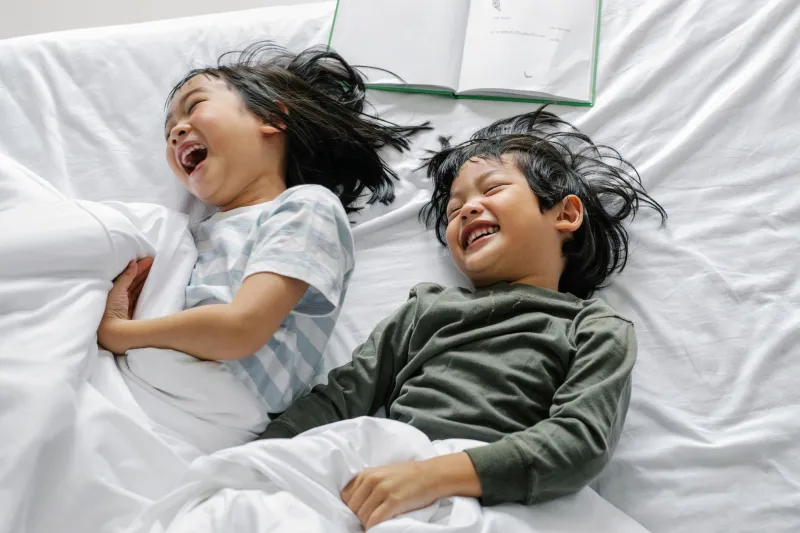
Lifestyle photography is built on the premise that the unguarded moments — the ones that happen between the posed shots — are often the most emotionally true. A child mid-leap off the couch. A grandmother wiping flour off a grandchild's nose. Two teenagers sharing a look that only siblings understand. These images don't just document what people look like. They document how people feel about each other.
That emotional authenticity is what makes lifestyle portraits the kind of images families return to again and again, not just in the weeks after a session but years and decades down the road.
3. Multi-Generational Stories Are Finally Getting Their Due
Traditional family portraits often defaulted to the nuclear family unit — parents and kids, maybe a pet. Lifestyle photography has opened the door to something richer: the full, complicated, beautiful web of extended family relationships.
Grandparents teaching grandchildren to bake, or garden, or fish. Cousins who only see each other a few times a year, captured in the particular chaos of a reunion weekend. Aging parents and their adult children navigating a relationship that's shifted and deepened over time. These are the stories that often go undocumented precisely because they don't fit neatly into a traditional portrait framework.
For many American families — particularly those spread across multiple states or navigating the complexity of blended families — a lifestyle session that centers these multi-generational connections can become one of the most treasured documents a family possesses.
4. The Ordinary Moments Are the Ones You'll Miss Most
Ask any parent of grown children what they wish they'd photographed more of, and the answer is almost never the big events. It's the Tuesday afternoon chaos. The way the kids used to fight over the bathroom. The particular phase when your youngest insisted on wearing a cape to the grocery store.
Lifestyle photography is, at its core, a practice of paying attention to the ordinary. A skilled lifestyle photographer isn't waiting for the peak moment — they're watching for the texture of everyday life and finding the images inside it. The result is a body of work that functions less like a highlight reel and more like a living document of what a family's daily existence actually felt like.
Those images become exponentially more valuable as time passes. The big events are usually well-documented. The ordinary Tuesday? That one disappears fast.
5. Children Are Photographed as Themselves, Not as Props
One of the most meaningful shifts in lifestyle family photography is the way it treats children as subjects with their own inner lives, rather than as cute accessories in an adult-centered composition. When kids aren't being directed to smile or stand still, their actual personalities emerge — and those personalities are often hilarious, surprising, and deeply individual.
A child's authentic self is one of the most fleeting things in the world. The particular way a four-year-old holds their favorite stuffed animal, or the specific expression a seven-year-old makes when they're concentrating hard on something — these things are gone before you know it. Lifestyle photography catches them in the act of being exactly who they are, right now, in this moment that will never come back.
For parents, these images often become the most emotionally significant photographs they own.
6. Lifestyle Sessions Create Space for Real Connection
There's a practical benefit to lifestyle photography that doesn't get discussed enough: because the session isn't structured around posing, families actually spend the time doing things they enjoy together. A session might involve cooking a meal, playing a board game, going for a walk in the neighborhood, or just hanging out in the backyard. The photographer works around those activities, not the other way around.
What this means in practice is that the session itself becomes a meaningful experience, not just a means to an end. Families often describe lifestyle sessions as one of the most intentional stretches of time they've spent together in months — a few hours with nowhere to be and nothing to do except be present with each other. The photographs that come out of that are different in kind from images made under the pressure of a posed shoot.
7. Visual Storytelling Is Becoming a Cultural Practice, Not Just a Service
Perhaps the most significant shift is this: families are beginning to think about photography not as a transaction but as a practice. Rather than scheduling a single annual portrait session, more families are choosing to document their lives across multiple sessions over time — building a visual archive that traces a family's evolution through different seasons, different phases, different versions of itself.
This is storytelling in the truest sense. A collection of lifestyle images made over five or ten years doesn't just show you what a family looked like. It shows you who they became — the relationships that deepened, the kids who grew up, the traditions that held, the ones that faded and were replaced by new ones.
At Kelcy Leigh Photography, this is the vision behind every session: not a single beautiful image, but a body of work that tells a story worth telling. Because every family has one. The only question is whether it gets preserved.
 Photo: Kelcy Leigh Photography, via dynamic-media-cdn.tripadvisor.com
Your Story Deserves to Be Told
The shift toward lifestyle photography isn't about rejecting the posed portrait — it's about expanding what family photography can be and do. It's about recognizing that the moments worth preserving aren't always the ones where everyone is looking at the camera. Sometimes they're the ones where everyone has completely forgotten the camera is there.
Those are the images that last. Those are the ones that get pulled out decades from now, passed around a table, and met with the particular quiet that only comes when a photograph has gotten something exactly right.