Aisle Seven Has Better Light Than Any Studio I've Ever Shot In
Aisle Seven Has Better Light Than Any Studio I've Ever Shot In
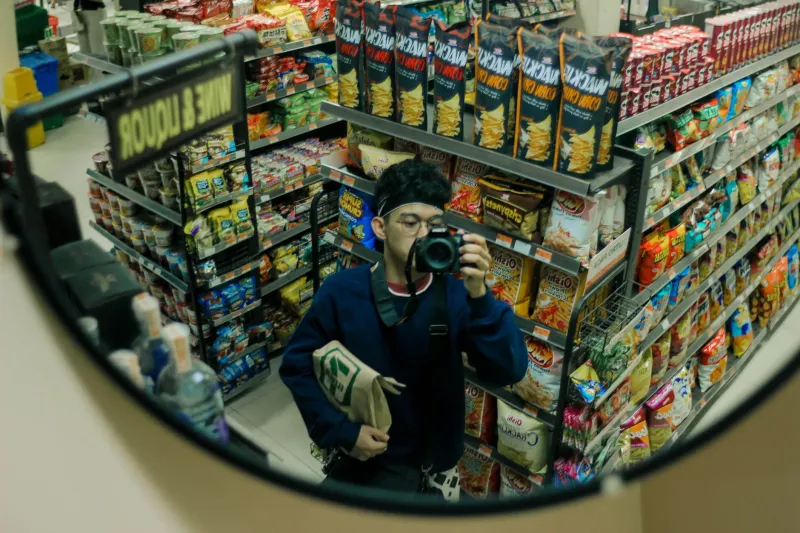
There's a moment I keep coming back to. I was photographing a woman — a retired schoolteacher from rural Ohio — and we'd originally planned to do the whole thing in a proper studio setup. Clean backdrop, controlled light, the works. She canceled the studio session twice. Life kept getting in the way. So on the third attempt, I just met her where she was: at the grocery store, picking up ingredients for her granddaughter's birthday cake.
I got the best portrait of my career in the baking aisle.
She wasn't performing anything. She was just herself — squinting at the back of a cake mix box, muttering something under her breath, flour dust on her sleeve from god knows where. The overhead fluorescents did something strange and beautiful to the lines on her face. And the image told you everything about who she was in a way that an hour in a studio never could have.
That experience cracked something open for me. And I'm not alone in feeling it.
The Studio Was Always a Kind of Fiction
Let's be honest about what a traditional portrait studio does: it removes a person from their life. You bring them into a neutral, controlled environment, ask them to sit or stand a certain way, and then try to capture something "authentic" under completely artificial conditions. There's a fundamental contradiction baked into that process.
For decades, that contradiction was acceptable — even desirable. Clients wanted to look polished. They wanted separation from the mess of daily life. A portrait was aspirational, almost theatrical.
But something has shifted in the cultural appetite for what a portrait should do. Audiences — and increasingly, clients themselves — are less interested in idealization and more hungry for recognition. They want to see themselves, or the people they love, reflected honestly. And honesty, it turns out, lives in the mundane.
Why Ordinary Spaces Work So Hard for the Camera
There's a practical argument and an emotional one, and both matter.
Practically speaking, real-world locations are full of the kind of environmental storytelling that no studio prop budget can replicate. A diner booth tells you something immediately: the sticky laminate table, the coffee-ringed menu, the neon bleeding through a rain-streaked window. A laundromat at 7 p.m. on a Tuesday carries its own specific emotional weight — the hum of machines, the warm heavy air, the particular loneliness and community that coexist in that space. These elements do narrative work for you before you've even pressed the shutter.
Emotionally, the effect is even more powerful. When people are in spaces they already inhabit — where they buy their hardware, do their laundry, eat their eggs — they stop performing for the camera. The environment absorbs some of their self-consciousness. They're not thinking about their posture or their expression; they're thinking about whether the dryer has twenty minutes left or whether the guy at the counter remembered they take their coffee black.
That distraction is a gift. It's where real expression lives.
Vulnerability Looks Different When There's No Backdrop
One of the things I hear most often from clients who've done location shoots in unconventional spaces is that they felt less exposed than they expected. That seems counterintuitive — surely a studio, with its controlled environment and professional setup, should feel safer?
But the opposite tends to be true. A studio setup, with all its equipment and formality, constantly reminds the subject that they are being photographed. Every adjustment of the light stand is a reminder that this moment is constructed. In a diner or a hardware store, the camera becomes one small element in a much larger scene. The subject stops being the center of a performance and becomes, instead, a person living their life who happens to be photographed.
That shift — from subject to person — is where vulnerability actually opens up. And vulnerability, in portrait photography, is everything. It's the quality that makes a viewer stop scrolling. It's what makes someone say, I know that person, even if they've never met them.
The Photographers Leading This Shift
Across the US, a growing number of portrait photographers are building entire practices around this approach. They're shooting in barbershops in Atlanta, fish markets in Seattle, and truck stops along I-40. They're finding that clients who were initially hesitant — who wanted the "nice" studio experience — often come away from a location shoot saying it was the first time they'd ever felt truly seen in a photograph.
The work coming out of these sessions tends to share certain qualities: a rawness in the light, a naturalness in the expression, a sense that the image was found rather than constructed. That quality of discovery is part of what makes it land so hard with viewers.
Social media has played a role here, too. As feeds have become saturated with hyper-polished, filter-heavy imagery, the portrait that looks genuinely unguarded stands out with almost startling force. Authenticity has become its own aesthetic — not because it's trendy, but because it's rare.
What This Means for How We Think About Portraits
If you're a photographer, the practical takeaway is simple: start paying attention to the spaces your clients actually live in. Ask them where they feel most like themselves. The answer might surprise you. It's rarely the place they'd initially suggest for a photo shoot.
If you're someone considering having your portrait made, think about what you actually want the image to do. Do you want it to show you at your most polished? Or do you want it to show you at your most true?
For most people, when they really sit with that question, the answer points them somewhere unexpected. Somewhere with bad lighting and good stories. Somewhere that smells like coffee or motor oil or fabric softener.
Somewhere that looks, in other words, exactly like your life.
The best portrait I ever made happened in a grocery store. I have a feeling the next one will happen somewhere equally unglamorous, equally real, and equally perfect.