Stop Waiting for the Perfect Location — Your Living Room Has Been the Best Portrait Studio All Along
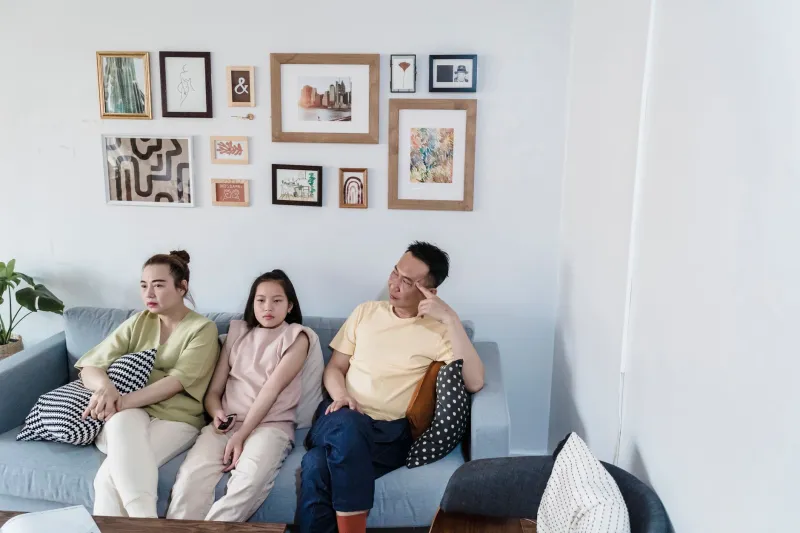
I've shot in some genuinely beautiful places. Sweeping fields at golden hour. Moody urban alleyways in Chicago and Nashville. Carefully lit studio spaces with seamless backdrops and perfectly diffused strobes. I love all of it. But if you asked me where the most meaningful portraits I've ever made came from, I'd tell you the same answer every time: inside someone's home.
Not a staged, cleaned-up, Pinterest-ready home. The real one. The one with the sticky kitchen table and the bookshelf that's one paperback away from structural failure. The one where the dog won't stop wandering into frame and the afternoon light through the living room blinds makes stripes across the hardwood floor.
That place. That's where the real portraits live.
The Myth of the Special Location
There's a deeply embedded cultural belief in America that a good photograph requires a special setting. We've all absorbed it. It's why people drive an hour to a popular trail for a fall family session, or rent studio time for headshots they could have made at home. The assumption is that the environment elevates the image — that if the backdrop is beautiful enough, the portrait will be too.
And sure, location matters. Light matters. Context matters. But here's what that assumption gets wrong: it treats the background as decoration rather than information. A seamless gray studio backdrop is clean, yes. It's also completely empty of meaning. It tells you nothing about who the person in front of it actually is.
Your living room, on the other hand, tells you everything.
What Lived-In Spaces Actually Communicate
Think about what's in your living room right now. The stack of books on the end table — what does that say about you? The kids' drawings on the fridge. The running shoes by the door. The throw blanket your grandmother made that's been on the back of that same couch for fifteen years. Every single one of those details is a sentence in the story of who you are.
When I photograph a family in their home, I'm not just capturing faces — I'm capturing a life. The worn armrest where Dad always sits. The corner where the toddler drags every toy in the house before breakfast. The kitchen island where homework gets done and arguments get resolved and birthday candles get blown out. That context doesn't distract from the portrait. It deepens it.
Years from now, when your kids look at photos from their childhood, they won't just see themselves — they'll see the house they grew up in. The light through those specific windows. The particular shade of that kitchen wall you painted the summer before your youngest was born. That's not clutter. That's memory.
Why Familiarity Breeds Visual Intimacy
There's also a psychological dimension to home sessions that's worth talking about. People are simply more relaxed in their own space. They're not performing for an unfamiliar environment. They know where the bathroom is, they know how their couch feels, they know the smell of the place. That comfort is visible in photographs.
I've watched subjects who were stiff and self-conscious the moment we arrived at a rented studio completely transform the second we walked into their living room. Something releases. The shoulders drop. The kids stop performing and start just being. And that ease translates directly into the images.
Familiarity is a form of intimacy. And intimacy is what separates a portrait that moves people from one that merely looks nice.
Practical Tips for Making Your Home Work as a Portrait Space
So how do you actually make this work? A few things I've learned from shooting in homes across the country:
Chase the window light. Most homes have at least one room with a large window that catches soft, indirect light for part of the day. Find it. A north-facing window is ideal — the light is consistent and flattering without harsh shadows. East-facing rooms are beautiful in the morning. West-facing rooms come alive in the late afternoon. You don't need a single piece of additional equipment if you position your subject well relative to that light.
Don't over-clean. This is advice I give every client who wants to tidy up before a home session. A little lived-in texture is your friend. A completely sterile, magazine-ready room actually works against you — it feels staged in the same way a studio backdrop does. Leave the books on the table. Keep the art on the walls. Let the space breathe.
Embrace the clutter strategically. There's a difference between meaningful clutter and visual chaos. I'm not asking you to shoot in front of a pile of laundry. But a bookshelf full of well-loved books, a kitchen counter with a fruit bowl and a coffee maker, a mudroom with kids' backpacks hanging on hooks — that's context. Use it.
Let the kids lead. In home sessions with families, I often ask the kids to show me their favorite spot in the house. Where they read. Where they build forts. Where they hide when they're playing. Those spots are almost always photographically interesting and emotionally loaded. Let the space tell you where to shoot.
Pay attention to color. The paint colors, furniture tones, and textiles in your home create a natural palette. Work with it rather than against it. Coordinate wardrobe choices loosely to the colors already present in the space — not matching, just harmonizing.
The Portrait That Only Your Home Can Make
There's a photograph I made a few years ago of a grandmother and her granddaughter sitting together on a faded floral couch that had clearly been in the family for decades. The afternoon light was coming through a curtain that was maybe ten years past needing to be replaced. The granddaughter had a book open in her lap. The grandmother had her arm around her, looking down at the page.
Nothing about that image was technically perfect. But it was completely true. You could feel the decades in that couch. You could feel the specific warmth of that house, that relationship, that afternoon.
No studio in the world could have made that photograph. Only that living room could.
Your home isn't a compromise. It's a choice — and increasingly, it's the right one.