What Comes Out When the Camera Comes Out: The Surprising Conversations That Happen During a Portrait Session
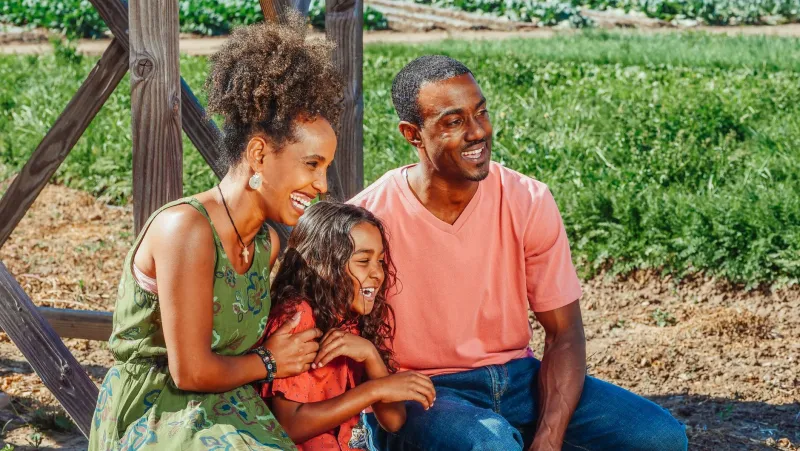
About forty minutes into a session with a family from suburban Atlanta, the dad said something I wasn't expecting.
We'd been photographing the whole group — mom, dad, three kids, the usual organized chaos of getting everyone to look in roughly the same direction. I'd pulled the parents aside for a few couples shots while the kids ran around with my assistant. And in the middle of adjusting their position, the dad looked at his wife and said, quietly, almost to himself: I don't think I've looked at you this long in years.
She laughed. He laughed. I took the photo.
But I also thought about that sentence for a long time afterward.
Something About Being Watched
There's a particular psychological state that happens when someone points a camera at you. You become, suddenly and completely, aware of yourself. You notice your hands. You wonder what your face is doing. You feel simultaneously exposed and strangely focused.
Most people experience that as discomfort, at least at first. But something interesting happens once the discomfort settles — once you've been standing in front of a lens long enough that you stop fighting it. The self-consciousness doesn't disappear, exactly. It transforms into a kind of heightened presence. You're here, in a way you often aren't during a regular afternoon.
And when people are fully present with each other, they start saying things.
The Confessions I Wasn't Expecting
After years of shooting portrait sessions, I've stopped being surprised by what people share during them. The camera creates a container — a defined space, a structured time — that somehow gives people permission to be more honest than usual.
I've had couples tell me things about their marriage during a session that they clearly hadn't said to each other in months. Not dramatic things — not confessions of crisis — but quiet truths. I miss how we used to be. You look so good today. I forgot how much I like seeing you laugh.
I've had teenagers open up to their parents in ways that apparently hadn't happened at home. Something about the neutral territory of a park or a studio, combined with the slight absurdity of the whole situation, seems to lower defenses. One sixteen-year-old told her mom, mid-session, that she was scared about starting college. Her mom had been trying to get her to talk about it for weeks.
I've had siblings — adult siblings who'd been at a low simmer of tension for years — dissolve into genuine laughter during a shoot and spend the last twenty minutes telling stories from childhood I could barely keep up with.
None of that was on the shot list.
Why the Camera Unlocks What the Dinner Table Doesn't
Family dinners are loaded. There's the pressure of the meal, the logistics of who's talking to whom, the inherited dynamics of decades of shared history. Everyone knows their role. Everyone plays it.
A portrait session doesn't have any of that. The roles are different — suddenly, everyone is just a person standing in a field trying to figure out what to do with their hands. The power dynamics flatten. The usual scripts don't apply.
There's also something about having a third party present. A photographer isn't a therapist, and the best sessions I've ever run weren't therapy — but there's something about having a neutral, focused witness in the room that makes people feel safe enough to be a little more real. You're not talking at each other across a table. You're both, in some sense, talking to the camera. And somehow that makes it easier.
The photographer becomes a kind of permission slip.
What I Do With It Behind the Lens
This is the part that doesn't make it into most conversations about portrait photography, but it should: the emotional intelligence required to work with families well is just as important as knowing your f-stops.
When I sense a real moment happening — when I can feel the conversation shifting from small talk into something genuine — I don't interrupt it. I don't redirect toward the shot I had planned. I go quiet, I move slowly, and I photograph what's actually in the room.
Because what's in the room is almost always more interesting than what I'd imagined.
I've learned to ask questions that invite people to be present with each other rather than with me. Instead of directing them to look at the camera, I'll ask one person to tell the other something they appreciate about them. I'll ask parents to remember something specific about the day each of their kids was born. I'll ask couples to think about a trip they took together that they haven't thought about in a long time.
People's faces when they're actually remembering something are completely different from their faces when they're trying to look good in a photograph. The light hits them differently. Something opens.
The Photos That Come From Those Moments
Here's what I know after years of doing this: the images that families hang on their walls, the ones they send me messages about years later, the ones they say look just like us — those almost never come from the perfectly posed moment.
They come from the laugh that happened right after someone said something unexpected. They come from the look two people exchanged when they thought I wasn't watching. They come from the moment a child grabbed a parent's hand without being asked, because something real was happening and their instinct was to hold on.
The camera doesn't create those moments. But it creates the conditions for them. It calls people out of their routines and into a space where being present is the whole point. And in that space, people remember things. They say things. They look at each other.
Sometimes for the first time in years.
Come to Your Session Ready to Be Surprised
If you've ever walked away from a portrait session thinking that was nice, but it felt a little surface-level — I'd gently suggest that the session might have needed more room to breathe. More silence. More genuine questions. Less performance.
The most meaningful work I do behind a camera happens when I stop trying to manufacture a perfect image and start paying attention to what's actually alive in the room.
Bring your family. Bring your real selves. Leave the performance at the door.
The conversations worth having — the ones you didn't know you needed — have a way of showing up when the camera does.