36 Exposures and No Delete Button: What Film Photography Is Teaching Gen Z About Slowing Down
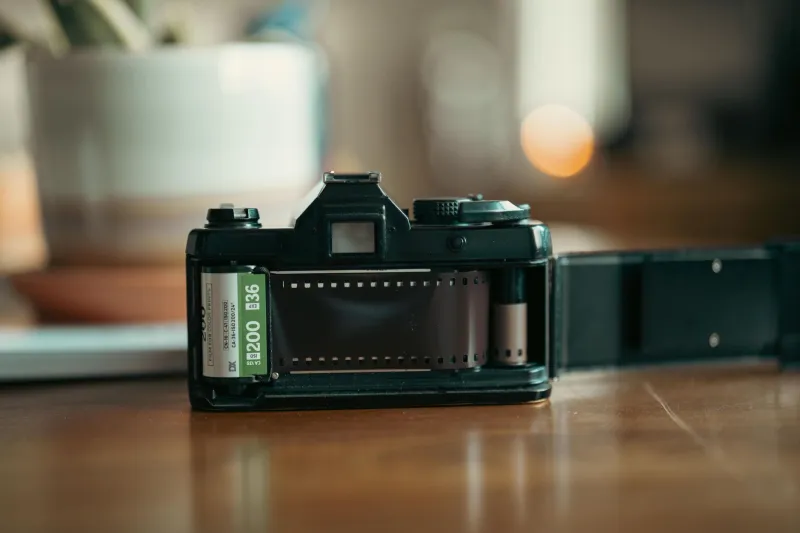
Something kind of unexpected is happening at camera shops and thrift stores across the country. Twenty-somethings — the same generation that grew up with front-facing cameras and same-day photo dumps — are loading rolls of 35mm film into cameras their parents probably sold at a garage sale twenty years ago. And they're not doing it ironically. They're doing it because something about the whole slow, uncertain, irreversible process feels more honest than anything their phone can offer.
As someone who spends a lot of time thinking about what makes a photograph feel alive, I find this shift genuinely fascinating. Because what these young photographers are discovering isn't really about nostalgia. It's about what happens to your relationship with a moment when you can't immediately judge it, filter it, or erase it.
The Weight of a Single Frame
Here's the thing about shooting on film that nobody warns you about: every single press of the shutter costs you something. You've got 24 or 36 frames on a roll, and once they're gone, they're gone. There's no burst mode. There's no chimping — that habit of immediately reviewing your shot on the back screen. There's just you, the light, the moment, and a decision you have to make in real time.
For photographers who've only ever shot digitally, that constraint sounds terrifying at first. But ask anyone who's stuck with film for a few months and they'll tell you the same thing: it makes you present in a way that's almost impossible to replicate otherwise. You start actually looking at a scene before you lift the camera. You read the light. You think about whether this moment is worth one of your remaining frames. That kind of intentionality changes the entire emotional texture of being behind the lens.
Gen Z grew up in an environment of infinite digital content — swipe, scroll, refresh, repeat. The idea that you might have to wait to see whether a photo worked out, sometimes for days or weeks depending on when you finish the roll and get it developed, runs completely counter to everything the algorithm-driven internet has trained them to expect. And yet, that's exactly what's drawing them in.
The Anticipation Is Part of the Point
There's a reason people talk about picking up developed film with the same breathless energy as opening a gift. You genuinely don't know what you're going to get. Maybe the exposure was off. Maybe the focus was slightly soft. Maybe you accidentally double-exposed a frame and created something way more interesting than what you originally planned.
That uncertainty isn't a flaw in the process — it's the whole point. When you shoot digitally, the feedback loop is nearly instantaneous. You see the image, you decide if you like it, you move on or reshoot. There's very little space for mystery. Film reintroduces mystery into photography, and it turns out a lot of people — especially younger photographers who've never known anything else — are hungry for exactly that.
I've talked to photographers in their early twenties who describe getting their scans back as one of the most genuinely exciting parts of their week. Not because the photos are always perfect — often they're not — but because the waiting creates a kind of emotional investment that instant digital review never quite manages to build. You care more about the images because you've had to sit with the not knowing for a while.
What You Can't Delete Forces You to Feel More
Here's where it gets really interesting from a storytelling perspective. When you shoot digitally, the photos you don't like essentially disappear. You delete them, and they never existed. But on film, even the frames you're not sure about still get developed. You still hold them in your hand. You still have to look at them.
That inability to instantly discard the imperfect ones does something subtle but meaningful to how you process an experience. You can't curate the memory in real time. You have to let the whole roll exist — the slightly blurry one, the one where someone blinked, the accidental shot of the pavement — and somewhere in that messy, unfiltered collection, you often find something true that you might have deleted if you'd had the option.
A lot of Gen Z photographers talk about this as one of film's most unexpected gifts. They came for the aesthetic — the grain, the colors, the particular warmth that certain film stocks like Kodak Portra or Fuji 400H produce — and they stayed because the process itself changed how they experienced the moments they were photographing. You don't just capture differently on film. You show up differently.
Discipline as a Creative Tool
There's a broader lesson hiding inside all of this that goes well beyond the film vs. digital debate. Constraint is one of the most powerful creative tools that exists, and it's one that's increasingly rare in a world designed to remove every possible friction from every possible experience.
When you only have 36 frames, you make better decisions. Not always — sometimes you still mess up the exposure or fumble the focus. But the discipline of working within limits forces a kind of creative clarity that unlimited options rarely produce. You stop hedging your bets by shooting 400 frames and hoping a few are great. You start trying to make one great frame, on purpose, in the moment.
This is something photographers at every level can learn from, whether or not they ever touch a film camera. The deliberate constraint, the intentional slowdown, the refusal to let instant feedback replace actual presence — these are habits of mind that make better photographers regardless of what you're shooting on.
The Image Means More When It Cost You Something
At the end of the day, what the analog revival among young American photographers is really about is meaning. We live in a world where images are essentially free — free to take, free to share, free to delete. That abundance is incredible in a lot of ways, but it also quietly erodes the sense that any single image matters all that much.
Film pushes back against that. It says: this frame cost you money, time, and thought. It says: you won't know if it worked for a while, so you'd better have meant it. And when you finally hold that developed print or pull up those scans and see that the light fell exactly the way you hoped, or that the expression you caught was even more real than you remembered — it hits differently.
That's not nostalgia. That's just what it feels like when a photograph has actually been earned.
And maybe that's the thing Gen Z is quietly teaching the rest of us: slowing down isn't a step backward. Sometimes it's the only way to make something worth remembering.